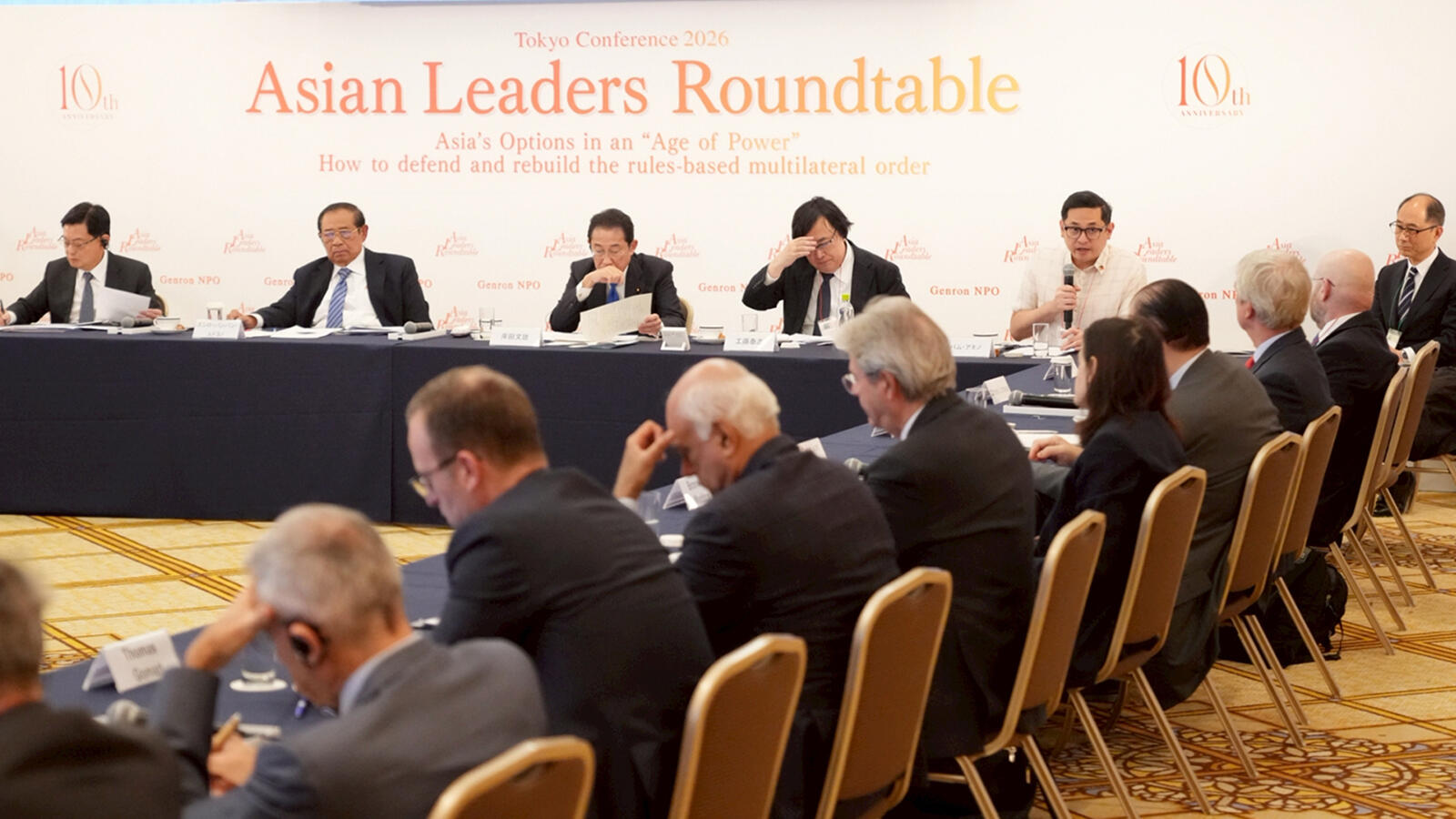
The inaugural Asian Leaders Roundtable was held in Tokyo on March 10, 2026, and welcomed leaders from around Asia for three discussions about the future of Asia.
The first question posed to the gathering was as follows: As power-driven politics and transactional approaches by great powers continue to expand, how does Asia perceive the current global order? Within this reality, what principles or values must be protected?
Four attendees were invited to present their thoughts on the above question, after which Asian Leaders Roundtable invitees and observers from Tokyo Conference 2026 held a short discussion under the Chatham House Rule.
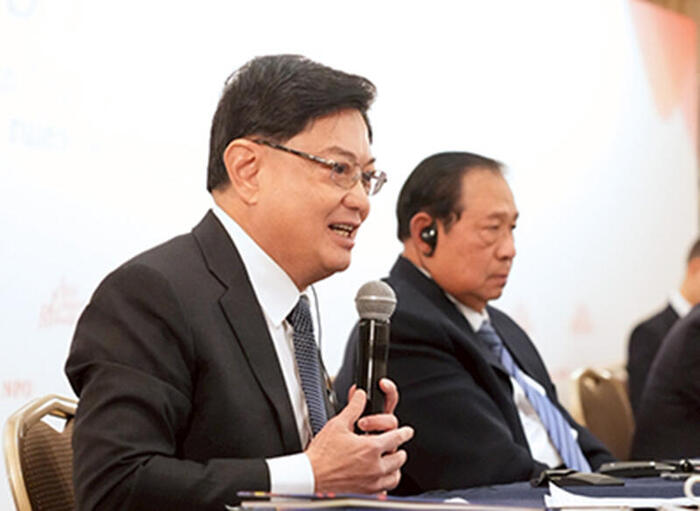
First to speak was former Deputy Prime Minister of Singapore Heng Swee Keat, who described the current era in which we live as one of "great uncertainty." He followed by praising the United Nations and other institutions of the current global order for what they have achieved thus far.
"The global order established after World War II, with significant contributions from the United States, has brought relative peace and stability," Heng said. "While conflict persists, the Cold War ended without escalating into another World War. Institutions like the United Nations have upheld the sovereignty of nations, resolved disputes, and fostered global agreements such as the law of the sea."
According to Heng, maintaining the peace was not the only achievement of the international order; it also succeeded in expanding how labor is deployed.
"Global trade and investment underpinned by rules forged at the WTO have expanded the global division of labor. Developed nations have benefited from cheaper and more diverse goods, while developing nations have seen rising standards of living. Asia in particular has been a major beneficiary."
His third observation about the current order was regarding financial institutions.
"The surge in capital flows to foreign direct investments and portfolio investments have enabled more efficient deployment of resources. Institutions like the IMF, World Bank, and Bank for International Settlements have played critical roles in supporting this system."
Heng described these "three pillars" as having collectively raised living standards worldwide, but also offered a warning.
"The global order is shifting towards power-driven politics and transactional approaches by the major powers, how Asia perceives and responds to these changes will shape our future."
He offered three potential principles that could guide Asia in moving forward.
"First, while Asia is diverse, we share common interests and values. We have all benefited from the principles of sovereignty, the rules-based global order, free trade, and multilateralism. Global institutions like the UN, WTO, IMF, World Bank, and ICJ are not perfect, but they remain essential. So instead of abandoning them, we must reform and strengthen them to serve all nations better.
"Second, Asia must continue to develop our economies. Many parts of ASEAN still have low per capita GDP and even in China, which has lifted hundreds of millions of people out of poverty, there are still hundreds of millions living on less than 1,000 U.S. dollars a year. Regional cooperation is key to this...but we must observe the principles of open regionalism, by engaging partners from Australia, Europe, and any other part of the world.
Heng's third point referenced the economic policies of the late Shinzo Abe, former Prime Minister of Japan.
"We must draw lessons from Abenomics, particularly its three arrows: monetary, fiscal, and structural policies. Monetary policy must ensure price stability and financial soundness. Fiscal policy should invest in public goods like education, healthcare, and infrastructure. Structural reforms, though challenging, are critical for adapting to technological advances like AI and quantum computing and biotech."
Heng pointed out how globalization can be best harnessed.
"Globalization thrives when economies restructure and innovate, creating new competitive advantages. Blocking progress or resorting to protectionism will only lead to conflict."
Heng believes that Asia has already learned a lesson about confrontation in that it "does not lead to development." Instead, the countries of Asia should accelerate engagement, find complementary relationships, and embrace restructuring. This is particularly true in the era of "big power politics." At times like these, ASEAN centrality and neutrality are vital.
Heng concluded, "Together we can address common challenges like climate change and pandemics, support UN sustainable development, and work together to harness the future that technology can offer us be in tackling climate change, pandemics, using AI, quantum computing, and more."
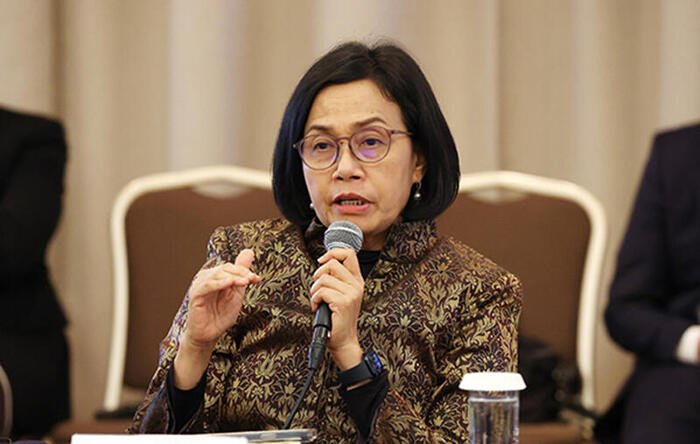
Next to speak was Sri Mulyani Indrawati, who served as the Minister of Finance of Indonesia and Managing Director of the World Bank Group. Sri Mulyani believes that ASEAN has an indispensable role to play in the global economy and in maintaining geopolitical stability
"Asia accounts for more than half of global economic growth, hosts the largest manufacturing hubs, the fastest growing middle class, and major financial and technological centers," she began. "Asia plays a decisive rule in critical supply chains and also in global trade and investment."
Sri Mulyani presented her ideas on how Asia can use these strengths to help stabilize the global system.
"I think we can pragmatically use the existing platforms that Asia benefited enormously from in the rule-based order through the transformation of the economy post-World War II by adopting open trade and investment, investing in human capital, building infrastructure, building good sound and clean governance of public and private institutions, and adopting sound macroeconomic fiscal and monetary policies as well as structural reform."
Sri Mulyani believes that the region must use the existing platform of collaboration to reduce fragmentation and broaden cooperation. Through that, ASEAN can keep the major powers engaged in structural dialogue.
"ASEAN and Asia can also maintain and strengthen the rules-based economic order. It is not perfect...but we could actively play a role in reforming the new world order through working together and collectively."
She went on to point out that recent conflicts and geopolitical tension have also introduced new instruments of economic warfare through sanctions, payment system fragmentation, and polarization of reserve currencies.
"These are no longer isolated tools," Sri Mulyani explained. "They are becoming structural features that threaten financial stability and generate negative spillover across economies."
"We need to continue working hard within regional forums, including strengthening our own cooperation," she continued. "Liquidity coordination, enhanced payment system connectivity, and expanded local currency settlement must be strengthened. Beyond (the creation of a) financial safety net, ASEAN and all its partners can play unifying roles
by diluting rivalry through practical cooperation. We could build cross-border infrastructure, including facilitating energy and energy transition, digital payment interoperability, disaster response coordination, and stronger food security collaboration."
Sri Mulyani concluded by asserting that Asia and ASEAN are very important players in the G20 and other global fora.
"ASEAN countries can contribute constructively by advancing key global initiatives, debt restructuring, climate change and transition finance, pandemic preparedness, and digital public infrastructure. These will not only serve the interests of Asia, but also many other low- and middle-income countries, especially in Africa."
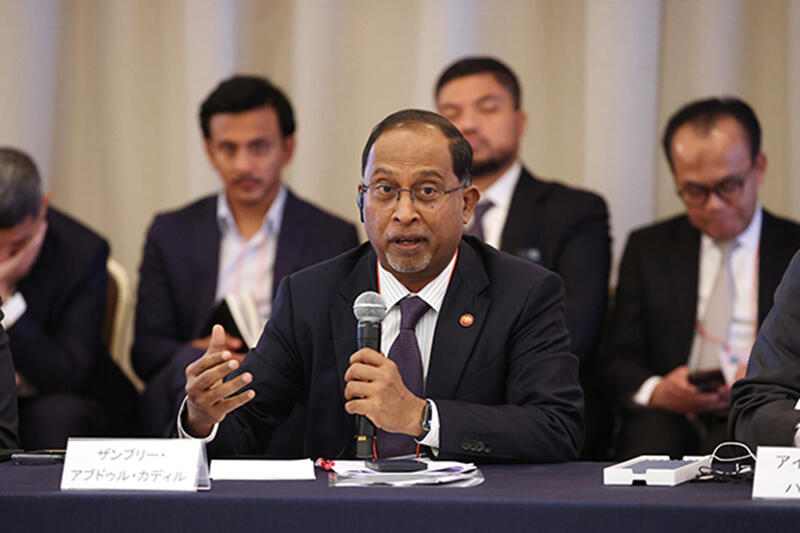
Former Malaysian Minister of Foreign Affairs Zambry Abdul Kadir spoke next, and began with a simple observation.
"Every generation believes it lives in a transformative era, but some eras truly reshape the trajectory of history," he said. "We are witnessing the rapid unraveling of the predictable rules-based multilateral order that facilitated decades of global growth. In its place, we see a system increasingly defined by zero-sum competition, unilateral deal making, and outright economic coercion."
Zambry noted that the current international landscape is increasingly characterized as an "age of power" by many analysts. Influence during such an era is often measured in military strength, technological dominance, and economic leverage. However, he pointed out that a lasting order cannot be sustained by power alone. From the Asian perspective, the world is not now simply a battlefield for great powers. Instead, it is suffering from a "growing deficit of trust ?trust in international institutions, trust in international law, and trust in the idea that rules apply equally to all." He then described some of the elements of the current global situation that are shaping perceptions in Asia, beginning with the weaponization of global interdependence.
"For decades, we were told that economy interdependence would prevent conflict," Zambry explained. "Trade was meant to be the great equalizer. Technology was meant to unite humanity through progress. Yet today we see supply chains being reorganized not for efficiency, but for geopolitical competition. For many countries across Asia, the trends (we see today) threaten the development pathway that lifted millions out of poverty."
The second element affecting Asian perceptions can be found in the "credibility crisis of the rules-based order," which is heavily affected by what Zambry called "contradictions."
"Major powers frequently call for the defense of the rules-based international order, yet we also observe instances where those rules appear to be selectively applied, creatively interpreted, and entirely bypassed when it becomes inconvenient to the powerful.
A system that operates on the basis of rules for others, with exceptions for ourselves, cannot sustain legitimacy. They become instruments of hierarchy."
Zambry's final element lies in the "the pressures of geopolitical binaries" resulting from the formation of exclusive strategic blocks and minilateral arrangements throughout the region.
"More concerning is the increasing pressure placed upon Asian nations to choose a side; to align with one power against another," he said. "Let me say this clearly, Malaysia refuses to view its future through the lens of a new Cold War. We will not be reduced to pieces on someone else's political chess board."
However, Zambry also offered some criticism of the previous multilateral order and asserted that Asian countries must not simply attempt to defend it.
"The old order was imperfect and often marginalized the voices of the Global South. Instead, we must work together to build a more balanced and equitable multilateral system."
Zambry outlined three essential principles for Asia to follow, with the first being "strategic autonomy through active non-alignment."
"It is not neutrality. It is not passivity. It is the freedom to engage with all partners without external coercion and is based strictly on mutual respect and our own sovereign national interests and policies. We (should) maintain strong relations with traditional Western partners, while also expanding engagement with the Global South. Our participation in emerging platforms such as BRICS demonstrates that nations can maintain diverse and overlapping partnerships. Strategic autonomy must remain the sovereign right of every nation."
Next, Zambry believes that Asian countries must protect sovereign equality and international law.
"In an age of power, smaller and middle-sized nations (will) rely heavily on international law as their primary safeguard. The sovereignty of a small nation must carry the same legal weight as that of a major power. We must consistently apply these principles together, whether we are discussing territorial integrity in Europe, freedom of navigation in Asia, or humanitarian law in Gaza, Ukraine, and the Middle East."
Ultimately, Zambry believes that the same standards must be applied to all countries, and this brought him to his final point, that international diplomacy requires shared values.
"In Malaysia, our government philosophy is guided by a modern framework which emphasizes sustainability, compassion, respect, innovation, prosperity, and trust. Some may dismiss this value as idealistic in a world driven by Realpolitik, but in truth, values are the foundation of sustainable international cooperation."
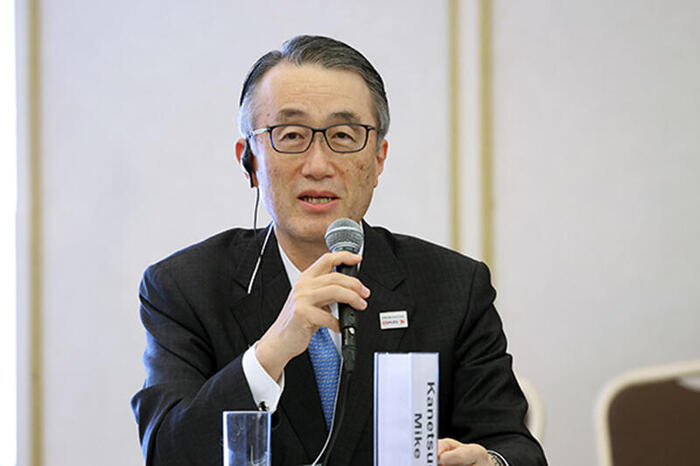
Kanetsugu Mike is Chairman of the Mitsubishi UFJ Financial Group, and he provided the perspective of someone involved in the banking industry as the final commentary on the guiding question for this discussion.
"Some people see the world facing fragmentation and, from certain perspectives, they may have a point. But speaking from the viewpoint of having tremendous confidence in Asia's future, I think a better word is 'reconfiguration'," Mike began. "Power and the transactional behavior of major states have always shaped geopolitics, economics, security, and finance to some degree. And today these forces are more interconnected than ever. This can redirect and even amplify their impact, but that doesn't mean the world order that is built around globalization is coming to an end."
Mike provided some concrete numbers that illustrated how much global trade has grown over the last twenty years even in the face of increased tariffs, de-coupling, de-risking, and rising tensions between China and the United States.
"Economic interdependence did not recede," Mike asserted. "The global economy is not fragmented. It is reorganizing and reallocating based on the current realities. What we cannot afford to lose is the commitment to sustain cooperation based on differences."
Furthermore, annual economic growth was equally positive, according to Mike.
"Over the past two decades, the global economy grew at an average rate of around 3%. At the same time, the Asia-Pacific grew around 5%, and Southeast Asia more than 6%. This is not a coincidence. Structural drivers like demographic advantages, rapid urbanization, strong manufacturing bases, and expanding interregional markets have all supported Asia's growth."
Mike also believes that it would be inappropriate to overlook how Asia achieved this in light of the significant political, developmental, and historical differences that exist in the region. He praised the region's strength in being able to maintain a pragmatic balance with "respective flexibility, not rigid uniformity," and noted how its large share of global trade requires a predictable framework that provides a foundation that supports investment and cooperation.
"This is vital because sustained growth needs stable rules, market connectivity, and trust. We also need to remove impediments to growth, including regulatory friction.
Finance is a driver ...but fragmented international financial regulations increase compliance costs across jurisdictions. Instead of broad comprehensive efficiency, this leads to isolated compartments of optimization, sluggish capital allocation, and constrained global growth. Harmonization and standardization of international financial regulations is the remedy."
However, Mike warned that the way forward must take into account the negative externalities that come with growth.
"Growth generates distortions like climate change and the chasms of economic inequality," he said. "These will undermine sustainability if they are not addressed."
Mike concluded with a cautiously optimistic observation.
"Asia will continue to be an engine of global growth, but it won't be automatic. It requires effort. Even in an 'era of reconfiguration,' we have to nurture connections, help institutions function effectively, reduce friction, and convert the perceived burden of the transition into opportunity. Instead of passively accepting the evolving order, Asia will maintain a spirit of cooperation that reflects and respects differences, strengthens the framework for growth, and removes factors that impede it. This is Asia's choice and I believe it will meet the challenge."
Participants next embarked on a bracing discussion that expanded on many of the points raised by the initial speakers. As previously mentioned, the Chatham House Rule was invoked to ensure a frank exchange of views, and the discussion revolved around what sort of concrete measures and policies the countries of Asia can implement to address issues related to multilateralism, economic integration, and sovereignty.
One participant recognized that the ASEAN platform may not be perfect, but went on to argue that "This is one of the most peaceful regions we know." Another followed up on this by asserting that the multilateral setup of the Asian "still needs to evolve."
"No, it's not perfect. It works for us, but it does still need to evolve, in particular with regard to security and the conduct of the seas. But I'm still hopeful that ASEAN can eventually come up with an agreement of conduct regarding how each of our countries can respect each other, respect our exclusive economic zones, and still continue to do trade and support each other's economic prosperity."
Roles that Asia's middle powers can play were also addressed when one participant said, "I think Japan, for example, and many other countries like India, can play this middle power role. We hope they will act as bridge builders."
Finally, one of the participants lauded ASEAN's strengths.
"One of the most important goals of ASEAN is to strengthen multilateralism throughout. Over the years, (ASEAN has) faced different difficulties between member states, but the whole idea is to increase economic integration. To cooperate. To strengthen our respective societies in our different countries. And most importantly, to promote multilateralism to keep the region open and to strengthen our cohesiveness."
Post a comment