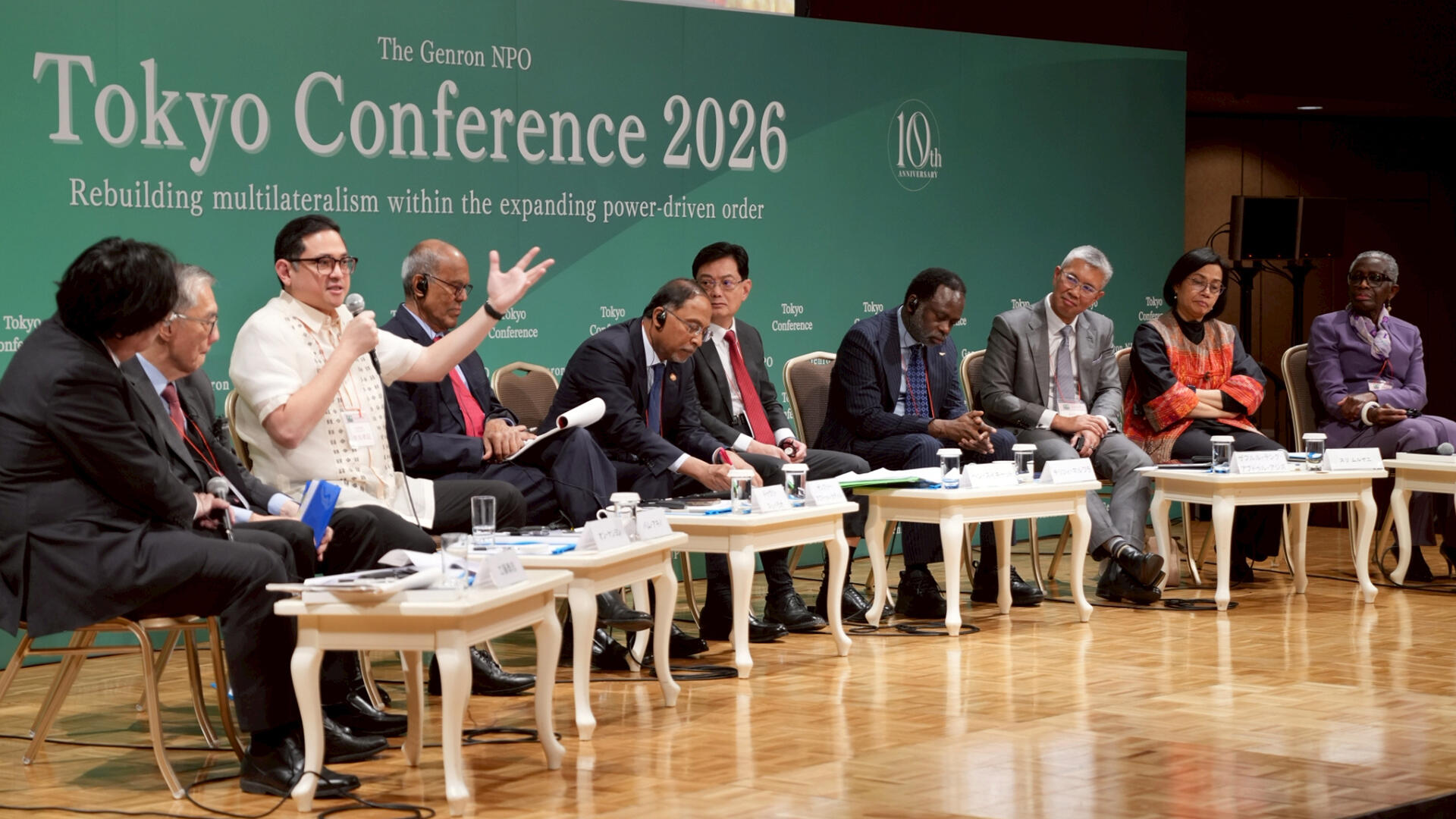
The Tokyo Conference 2026 Public Forum was held in the afternoon of March 11, 2026. Panelists Heng Swee Keat, Airlangga Hartarto, Sri Mulyani Indrawati, Tengku Zafrul bin Tengku Abdul Aziz, Tshilidzi Marwala, Zambry Abdul Kadir, Duvvuri Subbarao, Antoinette Monsio Sayeh, Bam Aquino, and Ong Keng Yong were joined by The Genron NPO President Yasushi Kudo as moderator for a discussion about the future of multilateralism.
Kudo opened the session by asking the panelists to consider the challenges faced by multilateralism, and what needs to be done to rebuild the multilateral order such that it works within the current geopolitical environment.
First to speak was Zambry Abdul Kadir, who noted that it is difficult to point to any single aspect of multilateralism as being broken, but that maintaining a hopeful outlook will help overcome the issues currently faced.
"On the one hand, of course, we have the dynamics of the world politics today," he explained. "But at the same time, we long for the ideal, for having an empathetic world."
He referred to a point raised by former Japanese Prime Minister Fumio Kishida in the previous session about maintaining a perspective based in idealism tempered with realism.
"Prioritizing your national interests, you also seek to balance the power, but at the same time, you must also look into how each country can work together in taking a multi-cooperative approach."
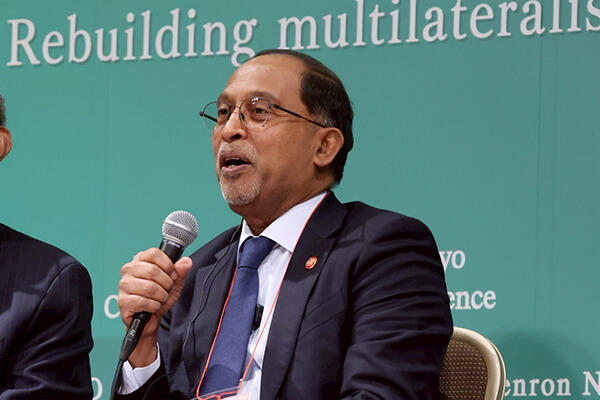
Sri Mulyani Indrawati added that multilateralism can only be defended if its mechanisms remain relevant.
"This multilateralism, in the form of multilateral development banks or the IMF, they will continue to relevant as long as they are always useful. They have to continue to adapt, to be agile."
Indrawati explained that institutional reform will be difficult to implement, but it is necessary.
"The most difficult reform is actually with regards to governance and shareholder composition, and it is exactly this that affects legitimacy and credibility."
Part of what makes reform difficult is the fact that the current multilateral order is the legacy of what the world looked like in the aftermath of World War II.
"Governance and shareholders change very slowly. At the UN, it's even more complex because it is a global political body in which one country has one vote."
Indrawati believes that multilateralism will continue to have a role in the reform of business processes, centralization and decentralization efforts, and crisis response, as multilateral efforts are not always made at the global level, and that this can be helpful.
"Regional efforts can supplement or strengthen this lack of credibility at the global level."
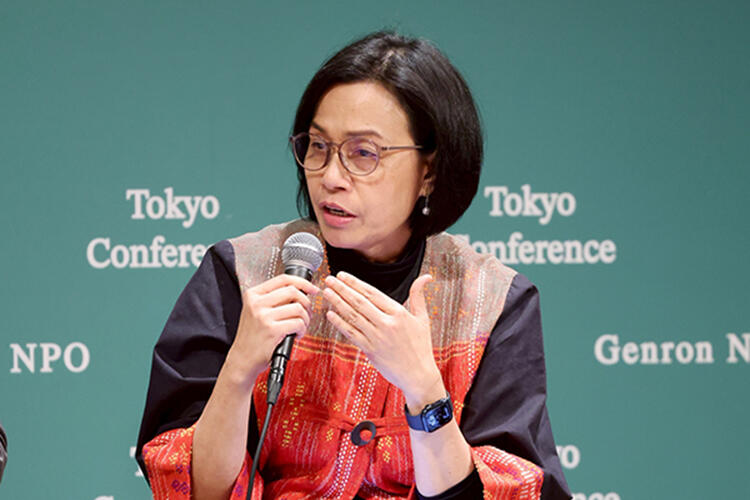
Tshilidzi Marwala spoke about the role the United Nations can play.
"Some aspects work, some aspects don't work. But let's just go back to the fundamentals. Let's go back to the UN Charter and the Declaration of Human Rights," he said, before explaining how the framework of the UN affects how it responds.
"The United Nations has three principal missions: peace and security, human rights, and development. If we just look at peace and security, the situation is not looking very good simply because of the way it is structured," he explained. "You go to the Security Council, and there's no consensus. So, when a very important aspect of the UN Charter, which is territorial integrity, is being violated, the Security Council is actually powerless because you have the P5 members with veto powers. Reform of the Security Council must happen."
Marwala was equally convinced that the second mission of the UN ? that of protecting human rights ? also needs attention.
"Human rights are being violated, and if these things are happening and we are not saying anything about it, we are all implicated."
Finally, regarding development, Marwala admitted that the world is unlikely to meet its targets for the Sustainable Development Goals, but there is still hope.
"We need to go back to the basics, the values, the values that are important, that are worth fighting for."
Kudo asked Marwala his opinions on the rise of non-UN bodies like the Board of Peace, and the question of what legitimacy they can have, and Marwala argued that such organizations are not a viable replacement for the United Nations.
"If you were to try to create something today that pulls everybody together into one room, you would not be able to do it," he said. "Let us build the United Nations, let us strengthen it, and let us deal with the weaknesses. And the biggest one is people acting outside UN authority."
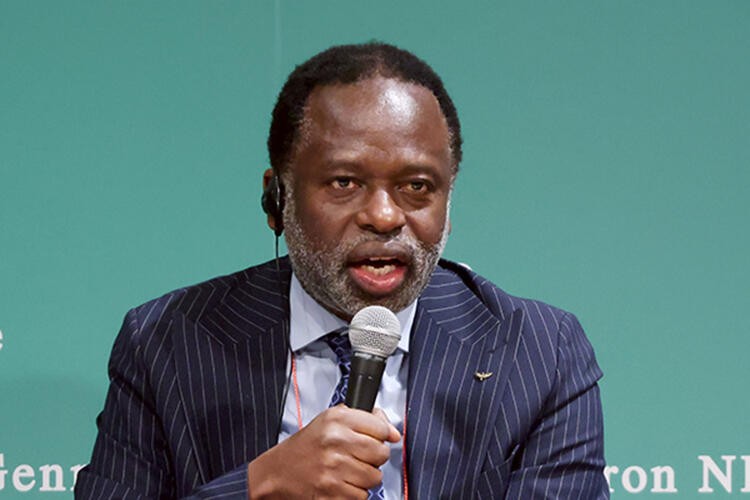
Antoinette Monsio Sayeh spoke about the role of institutions such as the IMF and their continued effectiveness.
"The fund was established as part of the Bretton Woods Agreement back in 1945 with the objective supporting macro and financial stability around the world along with its sister institution, the World Bank," she said. "I think those two institutions have learned to be adaptable to the changing circumstances and the changing world they work in, in support of their members. They certainly can do better, as we all can."
Sayeh offered some suggestions regarding how the Bretton Woods institutions can uphold, support, and enhance multilateralism through greater equality between member countries.
"I think a key task for them is (achieving) what I would term 'unfettered even-handedness' in the analysis of member country economic policies, and in their relationships with their member countries," Sayeh said. "Even-handedness means protecting the independence of staff advice and sharing best practices across member countries, not just unilaterally from advanced economies to developing countries, but also from developing countries to advanced economies."
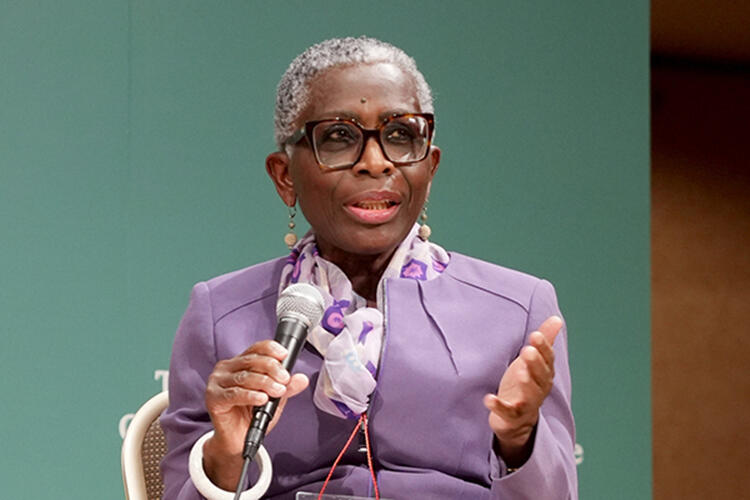
Heng Swee Kiat pointed to the continued success of multilateral institutions today, particularly those related to trade and those connected to Asia.
"One of the things members have been able to do within the rules of the WTO is start free trade negotiations," Heng said. "Before 2001, when the Doha Round was launched, there were fewer than 100 free trade agreements. The world now has 350 to 360 free trade agreements, and Asia is the most active region in negotiating free trade agreements, with 250 to 300 agreements involving at least one Asian nation."
Heng believes that even smaller countries such as Singapore still have agency in the world today though finding like-minded partners with whom they can work and achieve objectives together.
"We can continue to pursue this in many areas," he added. "And ASEAN itself has been doing a lot of good work on this area."
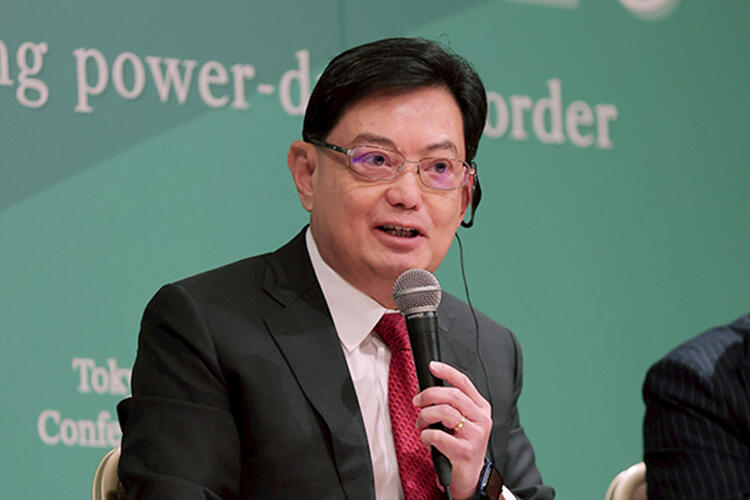
Bam Aquino spoke about the ineffectiveness of multilateral organizations in responding to war and dealing with global inequality, adding, "Maybe the old systems simply aren't working because they're really skewed towards bigger powers. In the case of the UN, it's the veto power."
Aquino suggested that an alternative could be to create smaller versions of the larger multilateral bodies, or as he described it, "Smaller pockets of like-minded countries."
"Yesterday I called it the coalition of certainty, or coalition of the certain," he explained. "Which countries will be there for you? Which countries can you really rely on?"
All countries have one thing in common that Aquino believes can be harnessed to build a better future.
"We are looking for peace. We are looking for which countries can stand up with each other and stand up for each other. I think that's the way forward, whether it's a smaller grouping of countries who are neighbors or who are similar in demographics or similar in economic structure, or even simply those with shared ideals. We're all in this together, although it seems that we're not."
This "coalition of certainty" could be the way forward, Aquino believes, as that could have a larger knock-on effect.
"(If we can) keep the peace, support each other's prosperity, be certain about each other's agreements, support each other during times of crisis, and more importantly, support each other towards shared prosperity, then I think we'll see a new world order that can benefit even countries like ours, and not just the big ones."
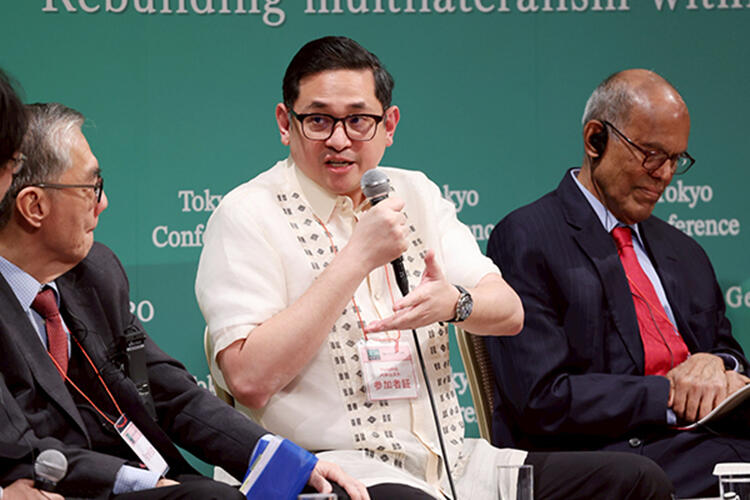
Tengku Zafrul bin Tengku Abdul Aziz turned the discussion to why multilateralism is facing challenges, as he believes understanding that can be beneficial in re-building it to meet the needs of the modern world.
"I think this is a question Americans also ask," Aziz said. "And I know in many other countries they're asking, 'What do we get out of these multilateral agreements' that they have signed."
Mindfulness is the keyword here.
"We talk to the multinationals, we talk to the large companies, and they say that multilateralism is good. Globalization is good. But when we talk about the principles of multilateralism, we need to measure whether the benefits translate to the micro level."
Sovereignty remains important, and trade agreements are a part of that, even when tensions are high.
"Malaysia, for example, signed an agreement on reciprocal trade with the United States. We have to. The U.S., like it or not, is our largest export market. China is our largest trading partner. Both are our two largest investors in the country and in the region as well."
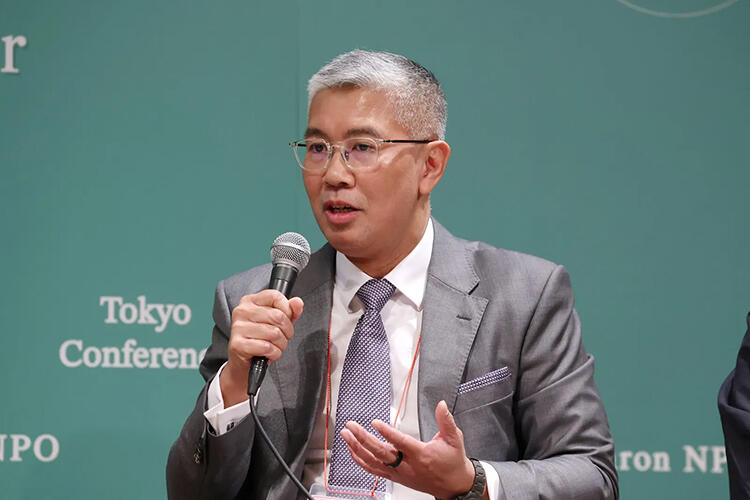
Duvvuri Subbarao brought the discussion back to why rebuilding multilateralism is important, and how it can be achieved.
"There is a rupture in the rules-based order, and that rupture hurts emerging economies more than others," Subbarao said. "What we now call the liberal international order ruled the world for the last 75 years, but that system was not ideal, not perfect, but everyone benefited. Some more than others, but everyone was better off."
Subbarao argued that institutions and organizations must continually "reinvent themselves" over time, but that an honest assessment of what is wrong with multilateralism today is necessary to beginning the process of rebuilding.
"The multilateralism that we had before was not truly democratic. Emerging markets did not have a voice. The rules were largely framed by those who had power. They enforced those rules as long as it played to their advantage, and bent them when it did not," he said. "Going forward, I believe that the objective (should not be) to restore the old order. That world is gone. The task before us is to rebuild multilateralism such that it becomes more inclusive and genuinely representative."
However, rebuilding multilateralism will not begin with a great declaration.
"It will begin with genuine cooperation, a willingness to share a voice and responsibility more fairly than in the past, and importantly, with some confidence-building measures," he said, before concluding. "The reality is this: if emerging economies and middle powers are not part of shaping the rules of the next global order, we will simply return to a system where a few write the rules and the rest live with the consequences. As Mark Carney reminded us in Davos, if you're not at the table, you're part of the menu."
Post a comment