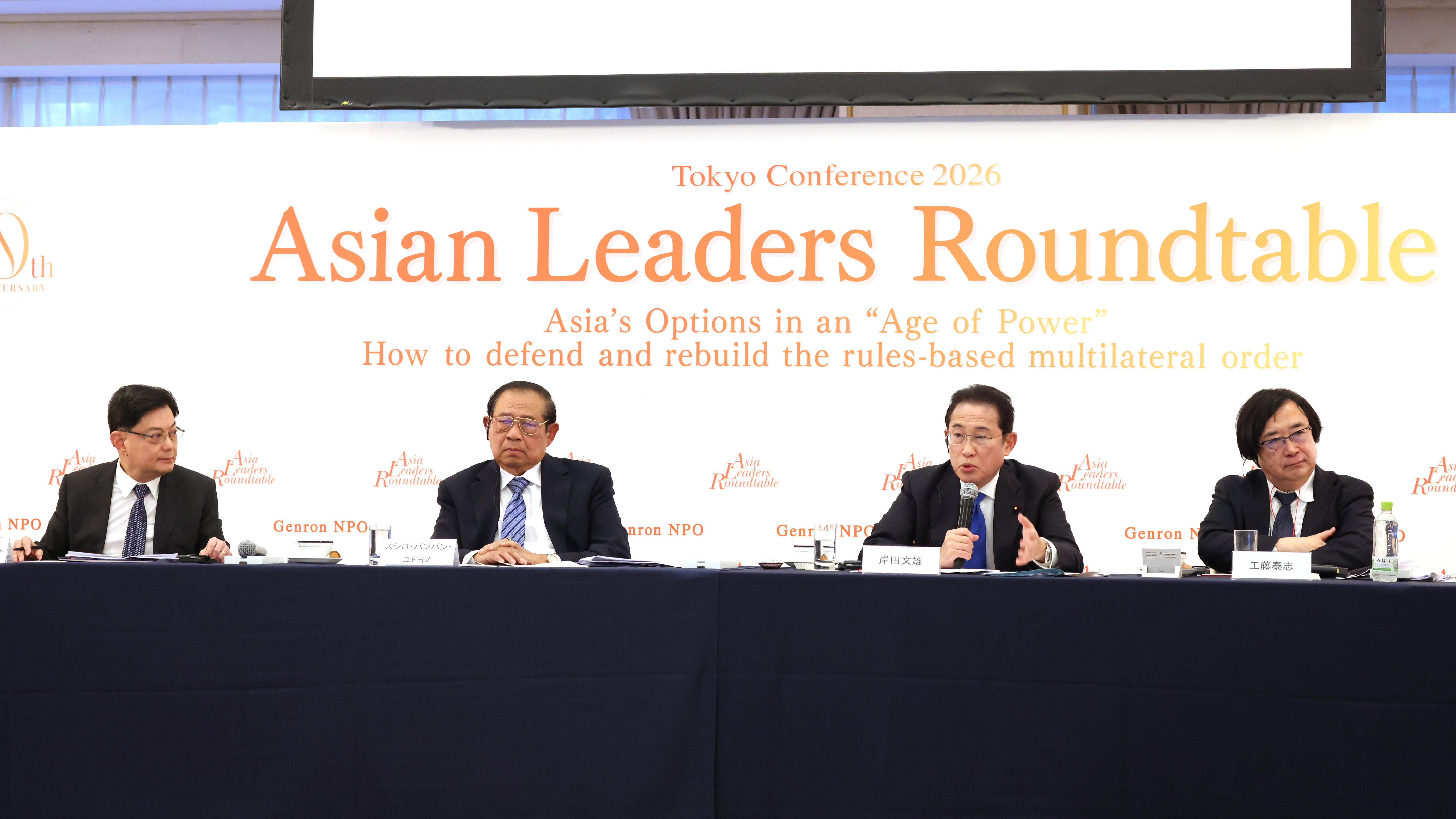
The inaugural Asian Leaders Roundtable was held in Tokyo on March 10, 2026, and welcomed leaders from around Asia for three discussions about the future of Asia.
This is the second of three articles covering the Roundtable, and it provides a summary of the second question posed to the gathering: Amid the current global challenges, what roles and actions should Asia assume at the national and regional levels, and through cooperation with the wider international community, to reshape the rule-based global order, revitalize multilateral cooperation, and achieve sustainable economic growth?
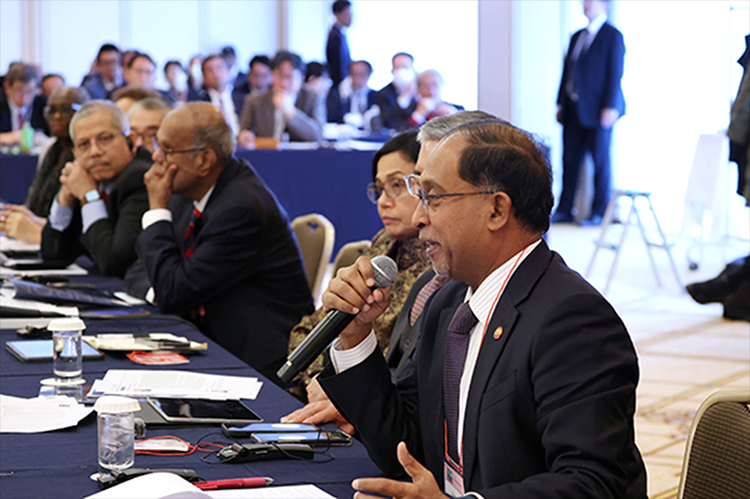
As with the first discussion, four attendees were invited to present their thoughts, after which Asian Leaders Roundtable invitees and observers from Tokyo Conference 2026 held a short discussion under the Chatham House Rule.
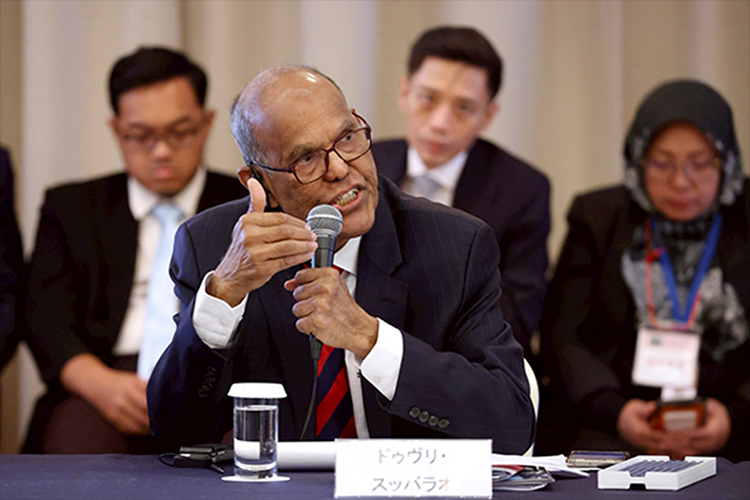
Economist Duvvuri Subbarao, former Governor of the Reserve Bank of India, opened with an assessment of the current state of the world ? describing it as fragmenting into two trade, currency, and financial blocs ? and explained how this affects Asia in particular.
"Major powers, especially the United States, are acting unilaterally. Economic nationalism is replacing economic efficiency. Technology is fragmenting and trust is thinning," he said. "Every country in the world is affected by this, but Asia has the most to worry about because while the earlier international liberal order wasn't ideal, Asia benefited the most and Asia has the most to lose."
Subbarao explained that participants were asked to provide plausible solutions to the questions being asked, and in response, he offered four ways Asia can respond to the current situation. First, he explained that the work must begin domestically, starting with strengthening institutions, protecting central bank credibility, ensuring regulatory transparency, and maintaining open and predictable economic frameworks.
"Asia can respond by reshaping the global order at home. If Asia wants to defend our rules-based system internationally, it must reinforce a rules-based system domestically," he said. "Credibility is cumulative and Asia's growing economic weight gives it not only influence but responsibility."
Subbarao's second point addressed what Asia can do at the regional level.
"Asia must move beyond integration towards norm creation," he said. "Initiatives such as ASEAN show that Asia can deliver economic cooperation even when global trade negotiations stall. Asia should aim for interoperable digital standards, sustainable infrastructure financing, climate cooperation frameworks, and payment connectivity without financial decoupling."
Thirdly, Subbarao pointed out that Asia can also play a role as a builder of coalitions, particularly from the perspective of the middle powers.
"Asia's diversity can be a strength. Japan, Korea, India, Indonesia, Philippines, Singapore, Australia: these countries may differ in politics and geography, but they share an interest in stability, open trade, and predictable rules. So, Asia can pioneer issue-based coalitions on climate finance, semiconductor supply chain cooperation, digital governance standards, and resilient health systems."
Finally, Subbarao called on Japan to play a leading rule.
"Japan must take the lead in Asia's response to the current international system because Japan is a US Ally, a major Asian economy, a technology leader, and a champion of rules-based trade." he said. "Japan has already demonstrated leadership ? from rescuing the TPP after US withdrawal to advancing high quality infrastructure standards and supply chain resilience. In a world of sharpened rivalries, I think Japan can serve as a stabilizer between major powers, a convener of middle powers, a defender of institutional norms, and a bridge between the global north and the global south. Not through confrontation, but through consistency."
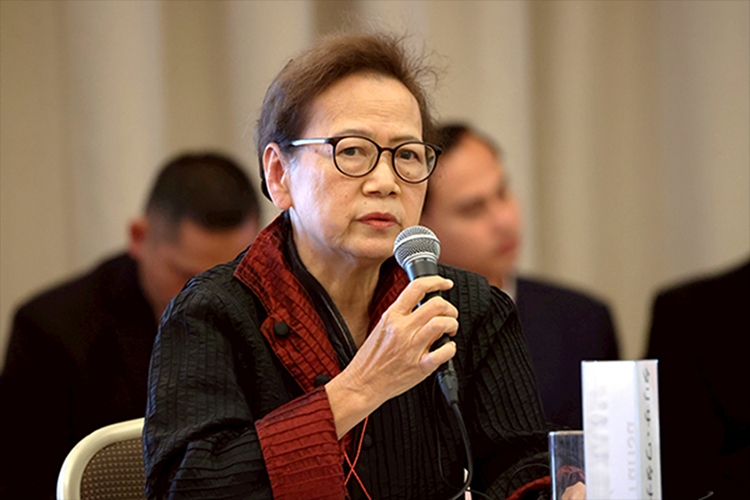
Former Bank of Thailand Governor Tarisa Watanagase was next to speak, and she described how the previous international status quo was responsible for the remarkable growth, development, and stability seen over the past several decades. However, she also lamented the current drift towards an order built upon unilateralism, self-interest, and leveraging of power.
"The driving factors behind these changes are nationalism ? as we see in the US "America First" policy ? superpower rivalry, weaponization of sanctions, tariffs, control of critical minerals, and also the ineffectiveness of global institutions. There's a Thai saying that when mighty elephants fight, the grass underneath is crushed. I think that's what we are seeing now. The conflicts of superpowers have crushed the rules and laws in geopolitics and global security and relevant global institutions."
Watanagase's assessment of the current situation is not entirely pessimistic, however.
"The consolation is that other areas of multilateralism have remained more or less intact," she said. "Middle powers and smaller economies are cooperating in a broad range of economic activities with their peers, and pursuing avenues to form relations with like-minded parties for bigger alliances for cooperation."
It is in these areas that Watanagase believes Asia has a role to play.
"In Asia, we have a number of influential middle powers and ASEAN, so Asia is the most relevant region to contribute to upholding this system. We are also used to putting our efforts into influencing financial services. For example, ASEAN successfully voiced our concern over the use of macroprudential measures, the balance of payments safeguards, and capital flow management. These are evidence that Asia has helped shape the architecture of the financial order."
Watanagase continued by explaining that the current order is a continuation of what the countries of Asia have already been doing through engagement and collaboration for common prosperity and stability, except that now the primary actors are middle powers and smaller economies. In addition, she believes that Asia has little choice regarding what it must do.
"We must accept that the world has changed. Cooperation was relatively easier before, but now we face higher nationalism and protectionism around the globe, and other new challenges: changing supply chains and aging populations, AI, and other technological disruptions, digital economy and finance, and the green transition," she said.
To Watanagase, it is imperative that Asia be united and maintain the spirit of rules-based cooperation, even in the face of the various challenges and different priorities held by the countries of the region. To better respond to this reality, she offered a potential tactical strategy.
"I think Asia can launch a critically important agenda to deliver outcomes highly relevant to the region and the world. (Achieving a) clean transition is a pressing issue for all, and I think if we can launch such an agenda, we will be able to get a consensus to launch and pursue it. It's important that middle powers engage us and (nations that) lag behind. I believe that a strong ASEAN is an asset to Asia, and it is in the interest of Asian middle powers to ensure that this remains the case."
To conclude, she highlighted the importance of a unified region, especially in relation to ASEAN.
"It's likely that after the conflicts in Latin America and the Middle East, superpowers may heighten their focus and intensify pressure on ASEAN to choose a side. Only a strong ASEAN can resist such pressure."
Tengku Zafrul bin Tengku Abdul Aziz is a Malaysian politician, banker, and investor who holds senior advisory roles in the Malaysian government and the Malaysian Investment Development Authority. He began by immediately describing what he believes lies at the root of the lag in improving the systems currently in place.
"We meet at the moment when power is moving faster than process. We are seeing fresh tariff uncertainty, tighter export controls, and conflict risks that affect energy, shipping, and business confidence. For Asia, these are not distant shocks. They show up quickly in freight costs, input prices, and investment decisions, as well as growth prospects. So, the question before us is not whether Asia will be affected; we already are."
It is Tengku Zafrul's view that Asia must choose to be "a builder," i.e., by increasing regional resilience and trust, and by engaging in practical cooperation with the wider world. To achieve this, he provided three potential courses of action.
"First at the national level, Asia has to strengthen resilience. We (must distrust) turning inward. That means credible institutions, clear policy signals, strong human capital, and the ability to absorb shocks without falling into panic or protectionism. Resilience should not mean retreat. It should mean having enough capability, enough diversification, and enough confidence to stay open."
Tengku Zafrul provided concrete numbers to back up his suggestion, noting that Malaysia's GDP grew by 5.2% in 2025, and the country approved record-high levels of investment and trade, with more than half of the approved investments coming from domestic sources. He believes that this proves that investors "still respond to clarity, credibility, and execution."
For his second proposal, Tengku Zafrul suggested that Asia put more effort into achieving real ? rather than "rhetorical" ? regional integration.
"In times like this, regions matter more, not less," he said. "If global rules are under stress, then regional cooperation becomes a stabilizer. It reduces friction, widens options, and helps countries avoid being trapped by binary choices. So, for ASEAN, this means focusing on practical outcomes: lower trade frictions, better customs and logistics coordination, stronger digital trust, more connected energy systems, and clearer pathways for sustainable investments. The chairmanship of ASEAN last year showed that ASEAN adopted many practical visions ? for example, Asian Community Vision 2045 ? reaffirming ASEAN's role in shaping rules-based regional architecture. ASEAN also advanced economic and digital initiatives like DEFA."
Tengku Zafrul's third proposal addressed the issue of how Asia should interact with the rest of the world.
"Asia should act not as a passive arena for rivalry, but as an active coalition builder. We should be realistic that all multilateralism is under strain, but the answer is not to give up on cooperation. The answer is to rebuild it where it can still deliver. That means defending some basic principles: sovereignty, rule of law, peaceful dispute resolution, and freedom of choice for smaller and middle-sized states. It means supporting WTO reform and other rules-based mechanisms that preserve predictability, and it means building practical coalitions around the issues where cooperation is still possible: climate, health, security, digital governance, supply chain resilience, and transition finance."
The issues addressed here are not abstract ones for countries like Malaysia, according to Tengku Zafrul.
"In 2025, Malaysia's total trade reached a record close to 800 billion U.S. dollars. A trading nation cannot thrive in a world where rules are arbitrary. When we speak about a rules-based order, we are really speaking about the conditions that allow growth, jobs, and stability to continue. This is why I believe Asia's role is not to replace the existing order, nor to pretend the whole system can simply be restored. Our role is to help modernize cooperation for the world as it is now. If Asia does this well, we will do more than protect ourselves from disruption; we will help shape a system that is more credible, more balanced, and more sustainable. And that, I believe, is the role Asia should now assume."
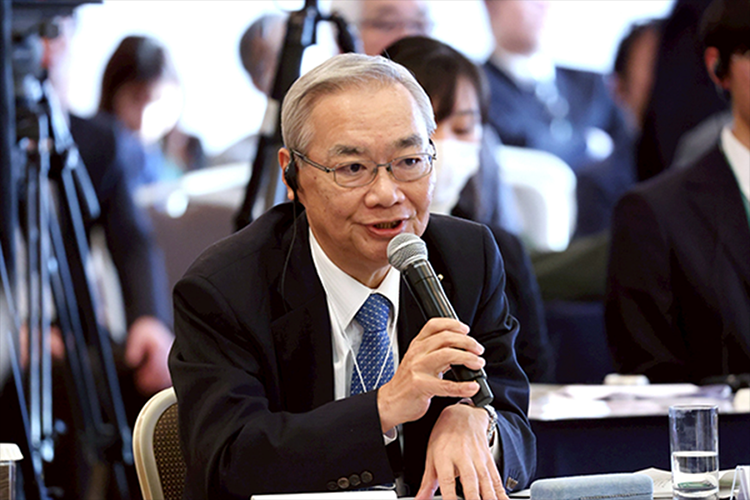
The final commenter for the second question of the Roundtable was Noriyuki Hara, Chair for the Committee on Asia and Oceania at the Japan Business Federation, and Chairman and Director of MS & AD Insurance Group Holdings.
Hara began by recognizing the difficulties multilateralism is facing due to drastic changes in the global environment. However, he pointed out that Asia ? a region home to a broad range of religious and ethnic cultures ? has been able to achieve growth through mutual respect of that diversity and through mutual trust. That latter point is one he believes particularly important when it comes to cooperation.
"In 1977, then Japanese Prime Minister Takeo Fukuda visited the countries of Southeast Asia, and in Manila, his final stop, he expressed a new foreign policy regarding affairs with Southeast Asia, the so-called Fukuda Doctrine," Hara explained. "The Fukuda Doctrine states that Japan will focus on 'heart-to-heart' cooperation with ASEAN as an equal partner."
Hara stated that the doctrine was applied not only to ASEAN, but to Asia as a whole, and that it is still being followed today.
"Japanese companies attempt to build trusting relationships local companies in order to grow together. This relationship of trust is a very valuable asset," Hara asserted, adding that economic security and autonomy are also important.
"Asian countries have different cultures, traditions, resources, and industries. These strengths must be harnessed such that our countries become indispensable to the global economy and capable of independent growth. Capacity building will be an important part of achieving that."
Hara noted that there are multiple sectors in which cooperation should be improved.
"First is free trade. Development and free trade are essential for economic security and supply chain resilience. It is also necessary to have not only bilateral FTAs, but agreements like the CPTPP. Multilateral trade frameworks are necessary to helping and complementing each other, and should include cooperation with countries outside Asia. Economic resilience comes not from protectionism but from open, connected relationships based on fair competition."
The second sector where collaboration will be useful is carbon neutrality initiatives tailored to Asia. With Asian economies continuing to grow, the demand for energy and fossil fuels will increase. However, as few renewables are in wide use yet, Hara did wonder how carbon neutrality can be achieved.
Hara believes that human resources development and exchange is another area ripe for cooperative efforts.
"The most important industrial resource is personnel, and labor exchange is vital. In addition, by exchanging knowledge and technologies, we can deepen our mutual understanding and contribute more to the connectivity of Asian economy."
Finally, collaboration is required to resolve the social and demographic issues that many countries in Asia are facing now or will face in the near future.
"I think that's important that we work together to resolve all of these challenges," Hara explained. "There are many areas in which Asian countries can still cooperate and mutually increase our opportunities."
Following the opening commentary, participants focused on two main threads of discussion.
The first touched upon how Asia can coordinate to address environmental issues, with one attendee asking why there seems to be no wider environmental agreement on carbon pricing. The same attendee added that the digital economy could be another area where Asia could take the lead, saying, "DEPA (Digital Economy Partnership Agreement) strikes me as a very good example of Asia being innovative in global governance and setting the stage for others to follow."
In response, it was noted that numerous Asian middle powers are doing "good work in green transition technological innovation," adding that, "If we can put those middle powers with the rest of Asia, and then we can work together and produce some data about standards and produce some very meaningful outcome for the world to move forward. That could be the first step."
This was soon followed by another comment about how ASEAN adopted its Strategy for Carbon Neutrality in 2023 as a part of its official regional road map, and also launched the Common Carbon Framework two years ago during COP. This commentor was positive about the future initiatives in this area, noting that current bilateral agreements between some member states suggest that a regional carbon market system is in the process of forming, though it may not yet be a single cohesive framework.
Also addressed was the increase in oil prices in the wake of the war in Iran. Attendees were asked what contingency plans are in place in Asia to deal with more extreme price increases, and one participant pointed out that this is not the first time the world has had to deal with high oil prices.
"With higher prices, there is a scramble to try to find a substitute like biofuels. The whole world is going to suffer from the economic adjustments that come with that kind of pressure, but it will compensate."
This ended the discussion, and the Roundtable turned to the third and final question.
Post a comment