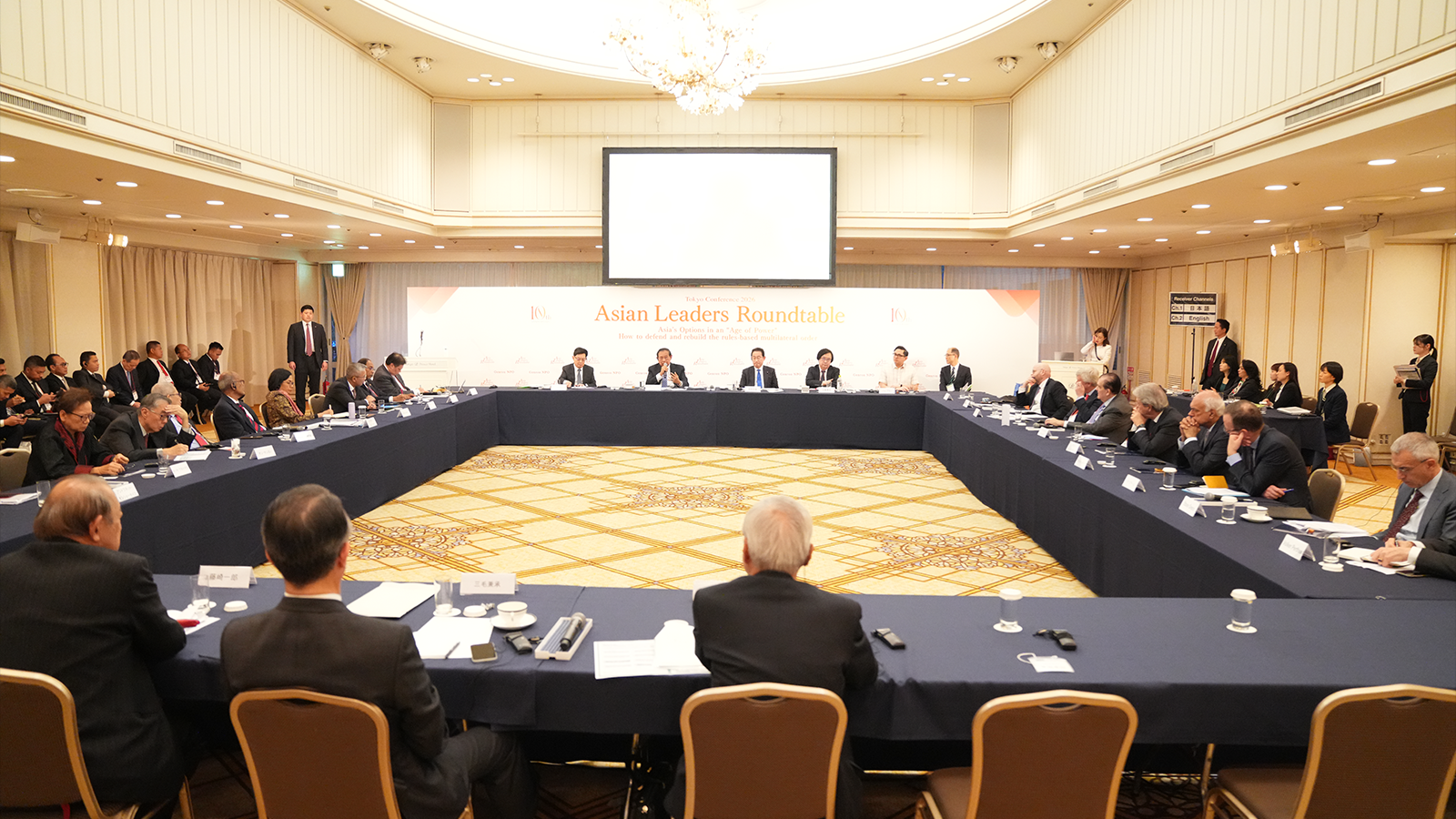
The inaugural Asian Leaders Roundtable was held in Tokyo on March 10, 2026, and welcomed leaders from around Asia for three discussions about the future of the region.
This is the third of three main articles covering the Roundtable, and it provides a summary of the final question discussed: What kind of global role should Asia aspire to play in the run-up to 2050?
For this question, two attendees were invited to present their thoughts, after which the forum was brought to a close with remarks from former Japanese Prime Minister Fumio Kishida, former Indonesian President Susilo Bambang Yudhoyono, and former Singaporean Deputy Prime Minister Heng Swee Keat.
Paolo "Bam" Aquino currently serves as a senator in the government of the Philippines, and he called on Asia to lead the charge in restoring faith in collaborative governance that can address the complex global issues faced today.
"As we look ahead to 2050, Asia can become a leading global force that champions innovation, operation, and sustainability. We along with other regional partners have the potential to set the standard for a new form of multilateralism that prioritizes regional partnerships over traditional power dynamics," he said.
Aquino stated that in order to achieve such a goal, Asia must "enhance its role as a driver of global economic growth by continuing to innovate and collaborate in technology and industry. By leveraging the diverse strengths of its mature and emerging economies, the region can foster advancements in crucial sectors such as digital technology, manufacturing, healthcare, and even sustainability."
A collaborative spirit is essential to success in this endeavor, according to Aquino. The nations of Asia ? along with their regional partners ? should not view each other as competitors, but should rather recognize the value of mutual support and open trade to enhance collective prosperity. His hope is that ASEAN and its partners can take the lead in this. Additionally, Asia must contribute to improving the security environment.
"Asia must lead in establishing a shared security framework within our region that values cooperation and respect for sovereignty. We must move away from reliance on might as a means of resolution and instead return to a rules-based order. And through this, we can cultivate an environment of stability and peace that benefits not just each country, but also the global community."
Over the years leading up to 2050, Aquino asserted that Asia's vision should emphasize technological innovation, mutual respect and prosperity, and sustainability.
"By embracing these principles and being open to new coalitions and partnerships, even maybe beyond the traditional ones," he said. "We can showcase a model of multilateralism that delivers collective economic growth, international cooperation, and a rules-based order that ensures shared security."
In conclusion, he warned that 2050 may be too long a time frame for the situation as it stands today.
"We need to act now to form these new coalitions and new multilaterals, or even bolster old multilaterals that we've been a part of," he said. "Because the world simply won't wait for us."
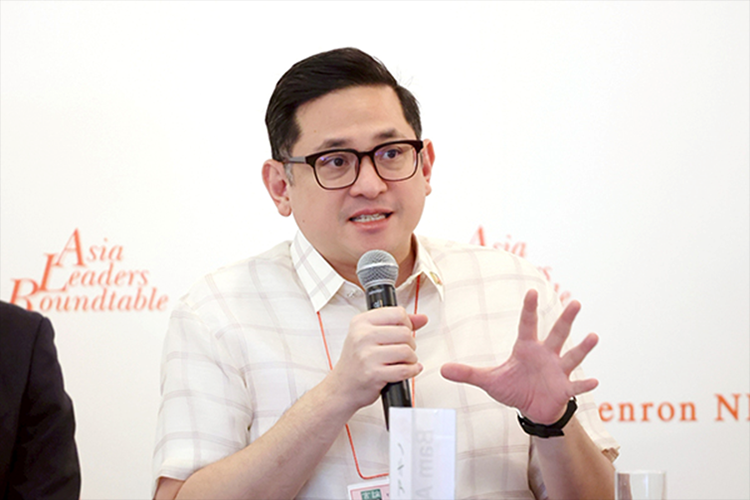
Indonesian Coordinating Minister for Economic Affairs Airlangga Hartarto began his comment by arguing that the multipolar global order is not a recent phenomenon. What makes the situation different today is that the interaction between the poles is clouded by transactional and power-driven politics that are affecting the systems in place.
"With rising protectionism and eroding trust in multilateral systems, the WTO, for instance, has struggled to deliver progress in critical and emerging issues such as digital trade and ensuring resilient supply chains during the global shocks," he said. "The United Nations is struggling to uphold effective multilateralism in the face of deep pure political division, nationalist trends, and complex global crises."
Airlangga believes that a candid understanding of the global situation is essential, as is taking a pragmatic approach to navigating it, and he offered a suggestion about where the first efforts should be made.
"In the short-term, what needs to be saved is the next ministerial conference at the WTO at the end of this month," he explained. "I think this is the key for the long-term regarding the role of multilateralism; if we aren't able to save the WTO, multilateralism is truly at the crossroads. How can we expect to have (stronger multilateralism) in 2050, if we cannot resolve (the issues surrounding) the next WTO meeting?"
Airlangga followed with a prediction about the economic environment in 2050.
"Asia will account for 52% of global GDP in 2050," he said. "China is expected to be the largest with GDP of around 58 trillion (PPP), and then India with 44, Indonesia at about 10 or 11, and Japan and South Korea at around 9 to 10. Asian countries have to commit to promoting connectivity instead of fragmentation. Instead of protectionism, we must strengthen open and rules-based trade, and we have to act together to save the WTO. We must encourage strategic cooperation and complementary growth."
Airlangga also endorsed harnessing ASEAN as a driver for change.
"ASEAN is one of the largest economic blocs, and through RCEP and CPTPP, I think we have to deepen the networks we have," he said. "Even if there is uncertainty in Middle East, if all Asian countries can work together like we did today, we can be sure that by 2050, it will be indeed the century of Asia."
After a brief discussion about the final question of the Roundtable, former Japanese Prime Minister Fumio Kishida offered an overall summary of the gathering.
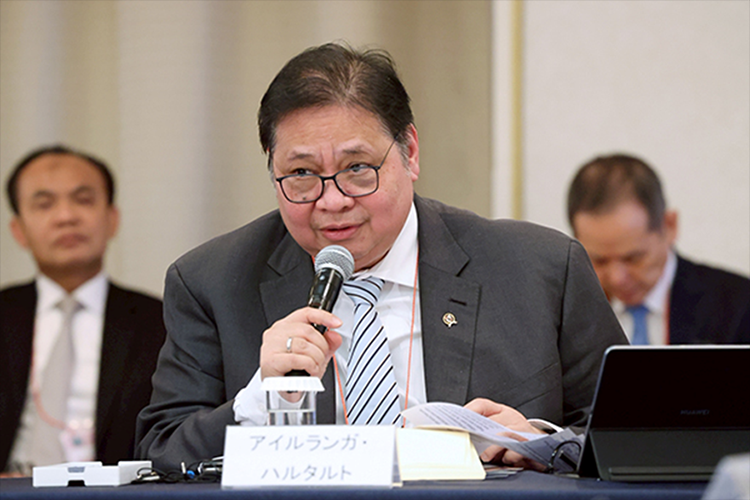
"Today's discussion was not about asking whether multilateralism has come to an end," he said. "The question asked was: 'In what form would multilateralism function in the midst of the current reality?' In this phase, Asia's role is crucial. Asia cannot sit on the sidelines simply observing the changes occurring around the world. Whether we are speaking about demographics, economic growth, technology, or the geopolitical situation, the choices made by Asia will define the future of the world. They will determine whether we move towards stability or division."
Kishida recognized the unique conditions existing in Asia, and noted that they were reflected in how attendees approached the Roundtable as well.
"Asia is not monolithic. There are different histories, values, and political regimes," he said. "We saw explicit differences in views during today's discussions, but we were also able to find commonalities."
Kishida stated that "No one is seeking a world that is divided. No one wants to leave to our children and grandchildren a world where order is formed only by force and power."
However, he also believes that Asia's role is not to replace the major powers and thereby be able to determine the form the order should take. It should instead help determine what should be protected. By raising its voices, Asia can demonstrate to the world that this is the minimum that countries should be doing.
Kishida closed by stating his belief that Japan has a role to play as a venue for dialogue and in supporting the differing positions of others, and he expressed his hope that the Asian Leaders Roundtable will become a permanent fixture that enables wider dialogue in the international community.
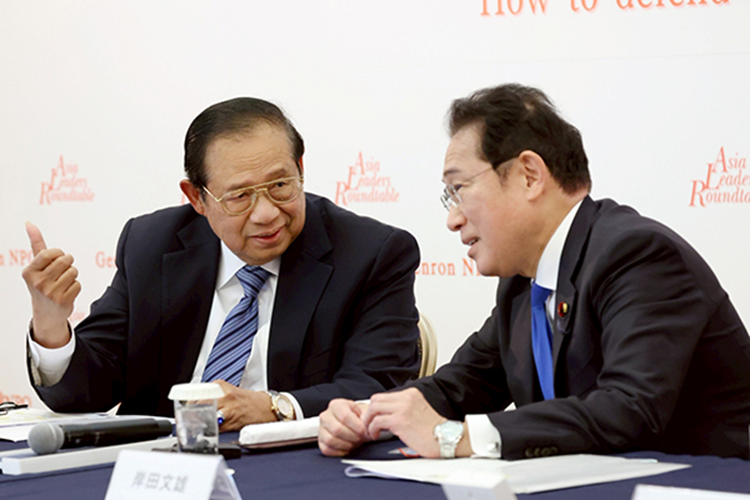
Former Indonesian President Susilo Bambang Yudhoyono provided his own summary of the dialogue by first describing how he came about his own values.
"I am a realist," he said. "But I love value-based realism. Before becoming a politician and then leading my beloved country, I was a military man. I served for three decades. My approach ...is very much influenced by my background and the journey of my life. But I think we can say that we basically agree on many things."
The first example Yudhoyono gave was that multilateralism must overcome unilateralism.
"We also agree that we have to respect international law, international order. Not the law of the jungle," he added, before quoting the Athenian historian Thucydides, who wrote, "the strong do what they can and the weak suffer what they must."
In Yudhoyono's word, this philosophy is, "For us, unacceptable."
Next, he highlighted the general agreement about empowering the United Nations and its organizations, and about respecting the Geneva Conventions and other laws of war to prevent human suffering, before turning to where the world can cooperate.
"We have go to back to global cooperation in dealing with the more important items on the global agenda: saving our planet and reducing poverty around the globe."
Finally, Yudhoyono summed up his opinion with an observation of where the world stands now in its understanding of the path forward.
"We know the 'what' and the 'why' regarding the improper direction our world is currently heading in, and we probably agree that we have to fix this broken world," he said. "If we could build real power collectively, then our world will likely improve, and we could prevent a real nightmare from occurring in our lifetime. Of course, there are many other important things that we may discuss together, but in essence we know the 'what' and the 'why.' Our task is to find the 'how': how to fix the bad things happening now in our world."
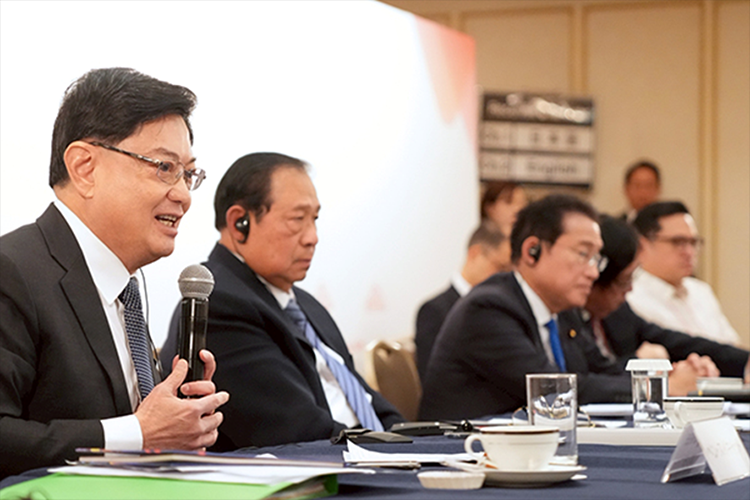
Former Singaporean Deputy Prime Minister Heng Swee Keat provided the closing remarks for the Asian Leaders Roundtable.
"We must continue to ask questions about what form multilateralism should take, the importance of values-based approach and the adherence to international law, and how we can do better," he began.
Heng expressed his appreciation for how Indonesia approaches its interactions with other ASEAN countries, particularly considered its size and influence, and implied that it could serve as a template for future broader multilateral frameworks as well.
"From the start, Indonesia did not use its weight and say that 'might is right,' but instead constructed a very positive relationship with Singapore, with all of us in ASEAN, and was a major builder of the ASEAN community, so much so that today the ASEAN Secretariat sits in Jakarta," he explained. "I think the Indonesian motto "Unity in Diversity" fits our discussion well. The key question is how do we turn this unity and diversity into unity and strength?"
Heng reminded the Roundtable that numerous attendees had referred to the importance of trust and credibility when it comes to cooperation, and noted that it is not enough to simply discuss these concepts, as for Heng, trust and credibility are about action.
"Asia can be a coalition builder ? a bridge builder ? to uphold the rule of law," he said. "We must continue to drive economic growth into the new age, when digital technology will be so critical. I'm very glad that ASEAN is doing the Digital Economy Partnership Agreement. We are pioneering the use of it in trade, which will be very positive."
Many speakers addressed the importance of ASEAN as a centralizing framework during the Roundtable, and Heng agreed.
"ASEAN centrality and neutrality are very important. ASEAN should reach out to everyone: build internal strength within ASEAN, and at the same time reach out to all those outside ASEAN in Asia and around the world, to build a stronger community of like-minded countries that emphasize multilateralism, free trade, and investment."
He also explained that while some believe ASEAN is resistant to change, in fact, it simply moves slowly.
"If you look at ASEAN from year to year, you think that it is a snail. It's really just crawling along," he said. "But if you look at ASEAN over 50 years, well, you are quite amazed at the progress that it has made. So, let's be patient. Let's continue to work hard. Let's continue to push at it."
Finally, Heng asked attendees to "look at the bright side" when it comes to the current global situation.
"Global trade and investment, despite all the negative remarks and all the negative developments, have not been too damaged yet. So, let us continue to do what we can and maintain that momentum."
In conclusion, Heng echoed the remarks of the co-chairs and Genron NPO President Kudo in expressing his hope that this forum for discussion between Asian leaders be encouraged to continue, and with that, the Asian Leaders Roundtable was brought to a close.
Post a comment