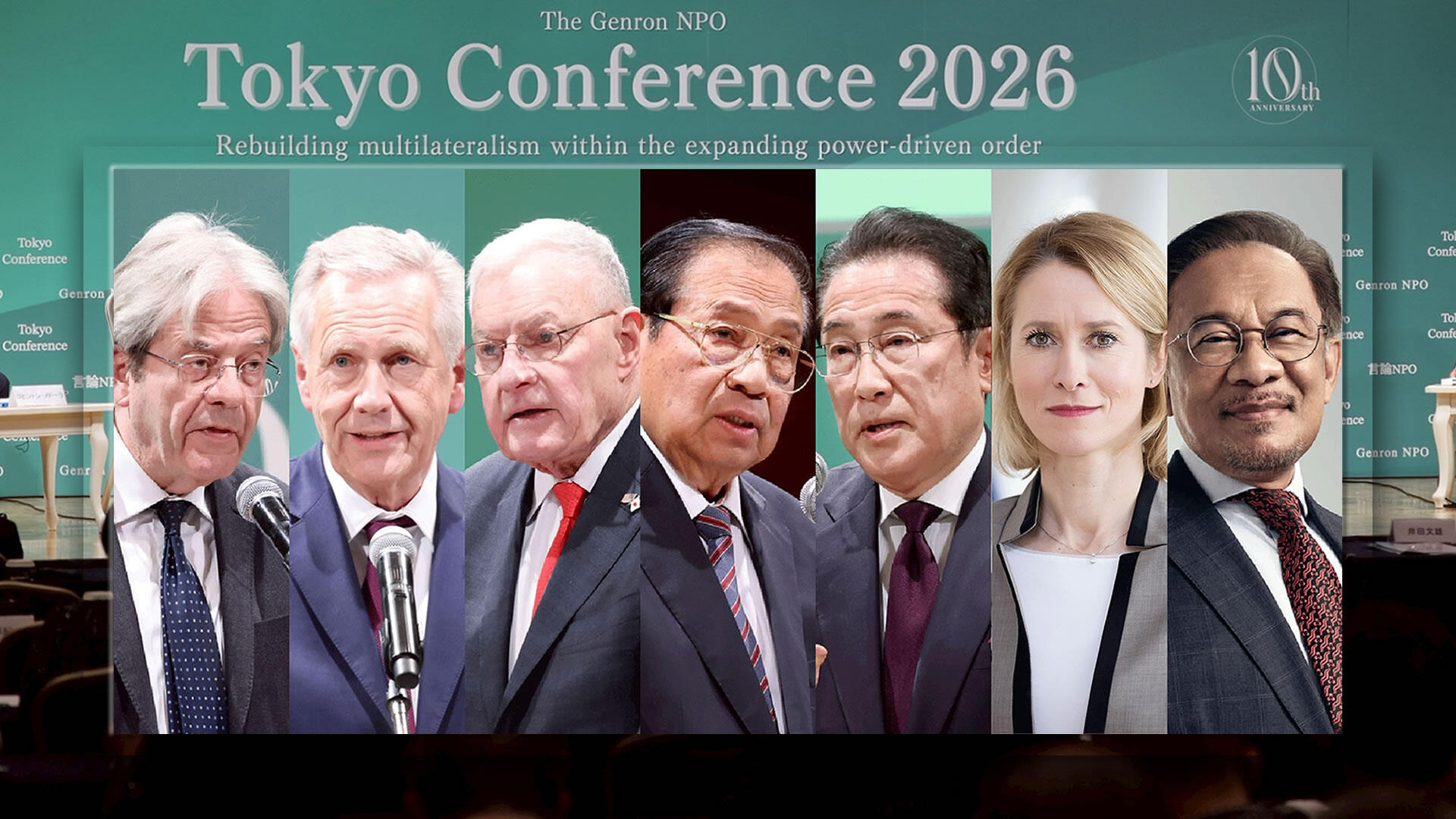
Tokyo Conference 2026 commemorated its tenth anniversary with a widely-lauded public event on March 11, 2026 titled "Rebuilding multilateralism within the expanding power-driven order."
The Conference was hosted by The Genron NPO, a non-profit independent think tank dedicated to building platforms for multilateral dialogue, in cooperation with think tanks from around the world. For this year's event, the annual two-session public forum was preceded by a series of keynote lectures and a panel discussion between leaders and diplomats from some of the world's major democracies.
Yasushi Kudo, president of The Genron NPO, opened the Tokyo Conference Public Forum with a brief overview of the situation the world finds itself in today; namely, that the world finds itself in an era of instability, seemingly poised at a turning point within an international order that is being subjected to major change.
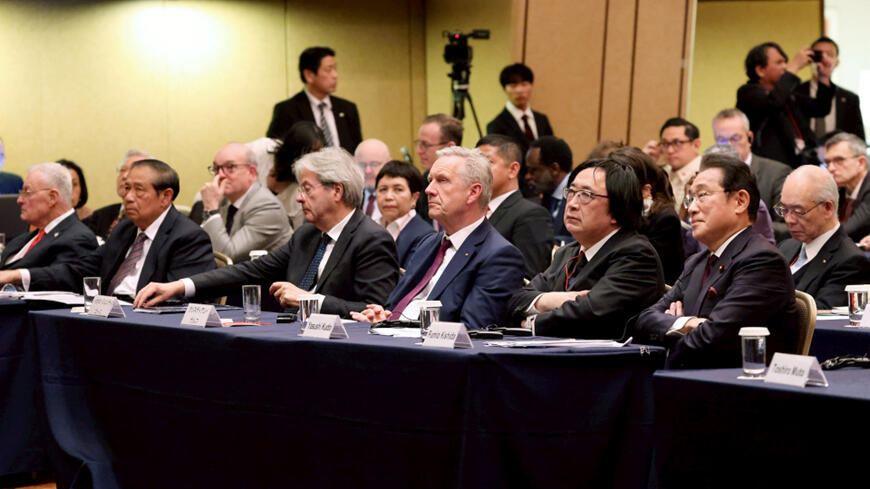
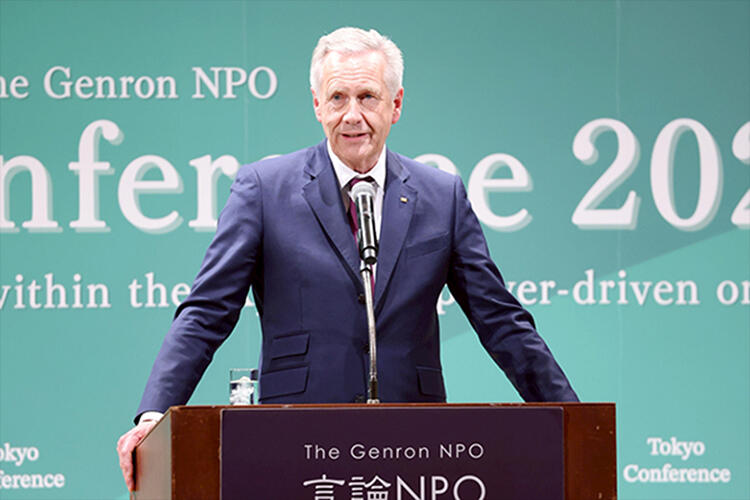
After welcoming the gathered dignitaries to the Conference, he ceded the podium to Christian Wulff, former President of Germany.
Wulff began his keynote by stressing that the world is at a crossroads, in which it is being asked, "Will rule-based cooperation be able to continue, or will we fall back into unilateral national actions, transactional partnerships, and mere deal-making?"
Wulff believes that the answer to this question lies in making fundamental choices between "homogeneity or pluralism, uniformity or diversity, being profit-driven or values-based, arbitrariness or the rule of law, uncertainty or stability. In short, it comes down to choosing between the law of the strongest or the strength of the law."
He stated that his ideal future does not involve an "ethically unipolar superpower" dominating the world. To illustrate why he believes the world is in the situation it is in today, he pointed to the words of philosopher Hannah Arendt, who asserted that "the death of human empathy is one of the earliest and most telling signs of a culture about to fall into barbarism."
Wulff also objected to the influence that countries like the United States have on the media and far-right extremism in other countries, as that influence is being harnessed "in an effort to destroy the European Union."
However, Wulff also expressed hope for the future and pointed to Japan and the countries of Europe as examples of how successful multilateralism has been.
"Multilateralism creates a framework of good rules that enables reliable coordination of complex international flows, facilitates the global division of labor and knowledge, learns from its own mistakes, and is capable of reform," he said. "Japan and Europe know that stability is not achieved through isolation, but through cooperation; not through nationalism, but through rules-based collaboration."
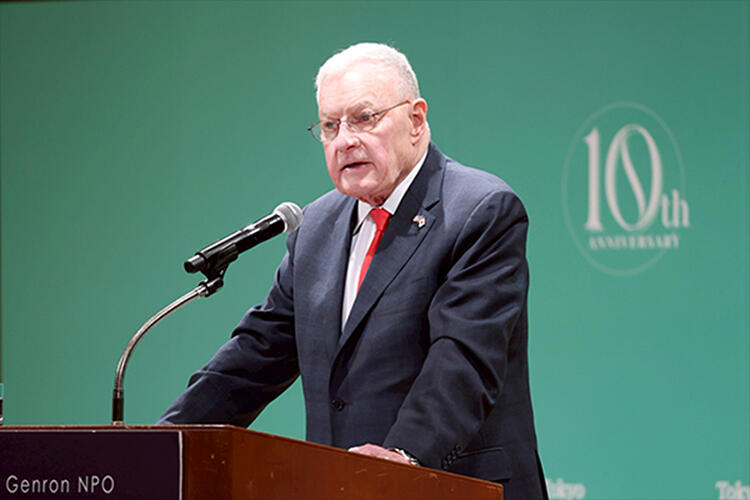
Following Wulff to the podium was Keith Kellogg, retired Lieutenant-General in the United States Army, former assistant to US President Donald Trump, and former Special Envoy to Ukraine. Kellogg began by focusing on how the Trump administration's foreign policy has shaped "America's place in the world today."
"It's transactional, always with 'America First' at the forefront," he said. "But Trump's foreign policy is not isolationism; it is smart power. It is prioritized power."
Kellogg also explained how the current administration's strategies are being used to achieve US objectives globally.
"The national security strategy emphasizes the restoration of American strength at home and the need to bring peace and stability to the world. The United States' number one goal is our continued survival and safety of the United States as an independent, sovereign republic," he said. "The National Defense Strategy highlights peace through strength, 'America First,' the 'warrior ethos,' and burden sharing."
In addition, he touched upon the wars in Iran and Ukraine, and stated that US efforts in Ukraine - especially President Trump's - have been particularly effective, before offering his own assessment of how best to end that war.
"The Ukrainians have been ready to agree to a full and comprehensive ceasefire along the lines of contact ever since we had negotiations in Jeddah of February 2025," he said. "We need to encourage both sides to basically claim victory and go home. President Trump has been the only leader in the free world that can bring that war to a conclusion."
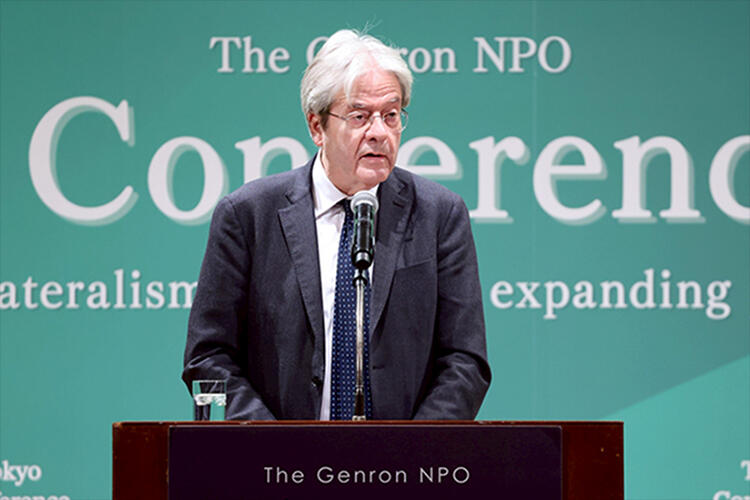
Paolo Gentiloni, former Prime Minister of Italy and former European Commissioner for the Economy, opened by observing that the rules are clearly "at risk" in today's world, and that it is heading towards an era of strained alliances. He argued that this is why Europeans must "invest in our autonomy, and the first part of this change is improving our own defense."
Gentiloni explained exactly what this would mean in Europe.
"Autonomy means diversification. This applies to energy and also to trade. Since President Trump's tariff announcements, the EU has shown it can redirect its trade flows with ease," he said. "The pragmatic reset of trade relations with China may also offer opportunities, provided reciprocity and security are guaranteed. Not protectionism, but reciprocity; not closure, but fair competition under WTO rules."
He went on to laud the real gains offered by trade agreements, e.g. reduced barriers and improved market access, while cautioning that they do have limits.
"They do not abolish strategic dependencies (we need to leave behind) by themselves," he said. "The question is not whether we should trade with China. We should and we will. It is how and when does trade become reliance, and when does reliance become vulnerability."
For Gentiloni however, autonomy is not limited to domestic resilience; it also requires coordination among trusted partners.
"Democracies must unite," he said. "Multilateral institutions are as strong as their members' willingness to respect their rules and live up to their principles, to cooperate fairly, transcend regionalism, and ensure that the rules-based order works for all. Because history will not wait, neither should we."
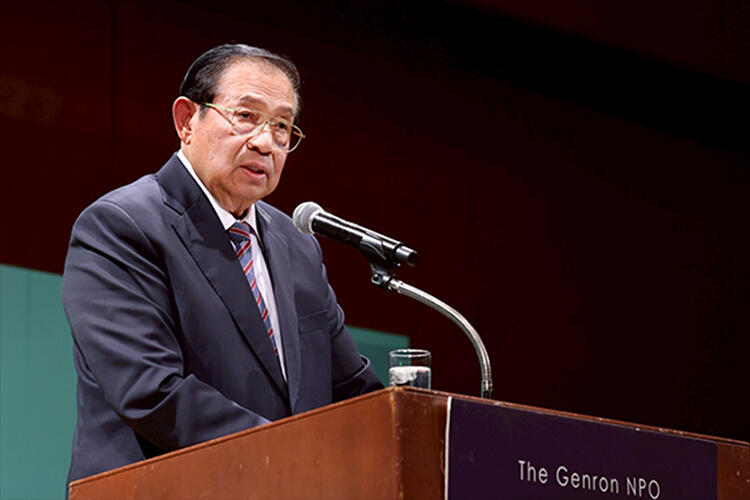
Susilo Bambang Yudhoyono served as President of Indonesia from 2004 to 2014, and he offered an Asian perspective of how the international order is changing "before our eyes," pointing out that Asia is in a unique position to help bolster it.
"Asia seeks stability without subordination. Asia seeks cooperation without coercion. Most Asian nations are middle powers," he said. "We do not deny the reality of power politics, but we believe power must operate within international norms."
Yudhoyono also pointed out that the status of the Global South has changed over the last few decades, and that in a "power-driven era" the question now becomes whether the Global South will be forced to choose sides, or whether its nations will be able to exercise independent judgment.
"In 2004, many countries of the Global South were still seen primarily as the object of policy, not authors of it," he explained. "That perception began to change (during the 2008 financial crisis with the rise of the G20.) Leaders who disagreed on many issues had to sit at one table. We did not solve everything, but we prevented systemic collapse."
Yudhoyono explained that G20 rose at that juncture not by design, but by necessity, and noted that the 2008 crisis highlighted that the Global South must also have a role in designing any future systems.
"Emerging economies were not spectators. They were at the table. That was a turning point. It showed that Global South could move from the margins to the center of global coordination," he said. "The Global South today is more diverse, more economically significant, and more politically self-aware. It no longer sees itself as an arena of rivalry. Instead, it sees itself as a stakeholder in shaping the system."
Yudhoyono concluded with a call for patience and caution.
"This age of power does not have to become an age of disorder. Diplomacy, restraint, and credible international mechanisms remain essential."
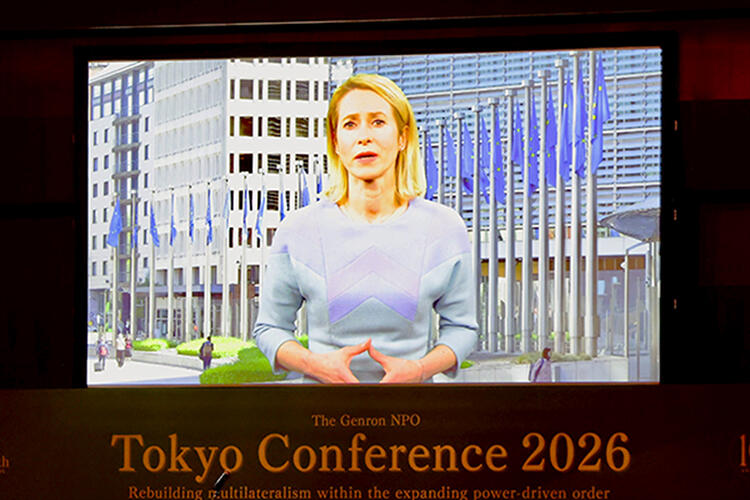
Former Estonian Prime Minister Kaja Kallas now serves as High Representative for Foreign Affairs and Security Policy and Vice President of the European Commission. Kallas provided a video message for the conference, in which she pointed out that while a new world order is in the making, there are still many unanswered questions, including what final form the new order will take. For Kallas cooperation is essential to building an effective order.
"Those of us who want to be the architects in rebuilding a multilateral system, rather than subjects of a system where only power counts, must pull in the same direction. For the European Union, that is why partnerships are what count."
Kallas pointed out the similarities between Japan and the countries of the European Union, but argued that their perspectives are not unique to them.
"We share a commitment to multilateralism, human rights, and an international order based on rules. We see them as the foundations for peace, stability, and shared prosperity," she said. "We know that the rise of unchecked aggression is a symptom of an expanding power-driven order. But the vast majority of countries want a world that is based on some kind of rules. We still believe in the sovereignty of nations. and this guides our approach to economic security and resilience."
Kallas asserted that "trusted and reliable partnerships are what separates the weak from the strong, and they are ultimately what will determine whether we can dissuade the world from succumbing to the will of a few," before concluding with a promise.
"We must remain engaged. In the quest to strengthen multilateralism, you will always find support in Europe."
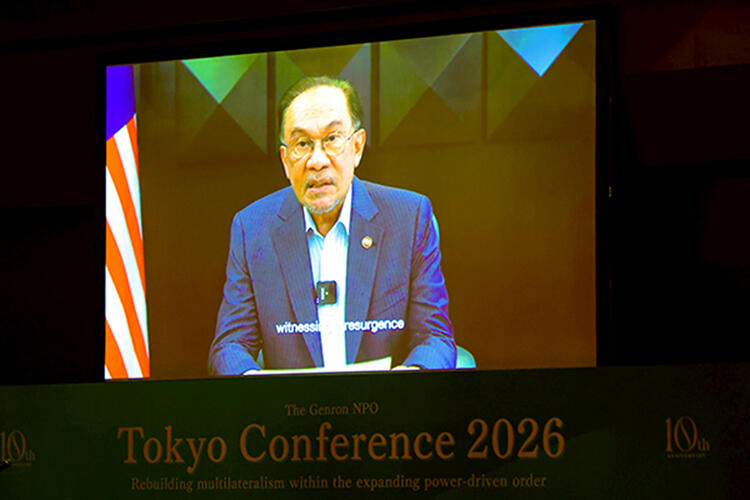
Current Malaysian Prime Minister Anwar Ibrahim also offered a video message to be played before the gathering. Before getting to the heart of his keynote speech, Prime Minister Ibrahim expressed his country's condemnation of the "recent unprovoked military strikes against Iran." He called for an immediate and unconditional ceasefire, urging all parties to "abandon the path to violence and return to the negotiating table with genuine intent."
Next, he turned to the topic of middle powers and the strength inherent to cooperation.
"The true strength of the middle powers lies within our regional collectives," he said. "At the East Asia Summit, Malaysia advocates for a vision where diversity does not divide, where we can initiate meaningful resolutions and shape norms; standing for justice, even when it is inconvenient. This is our definition of multilateralism. Not passive, but persistent; not naive, but necessary."
Ibrahim was clear about Malaysia's position on what must be done to bolster the international order.
"To restore trust, we need to return to the foundational values of the United Nations Charter. The reform of the Security Council is no longer optional. The veto power must be abolished in the long run."
Finally, he described Malaysia's own future path and objectives.
"Malaysia chooses to be a nation that drives inclusive development, not just for ourselves, but for the region and the world. Let us work together to ensure that the multilateral institutions of the future that we rely on are not mere tools of the powerful, but instruments for the pursuit of the common good of humanity by nations united in the quest for global peace and prosperity."
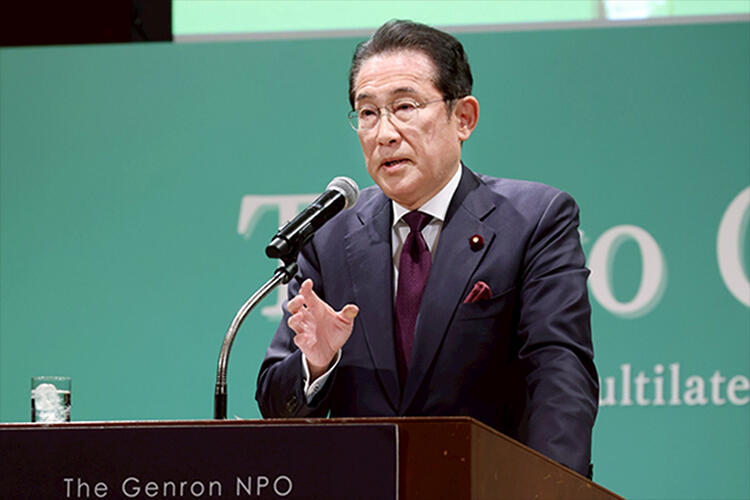
The final keynote speaker was Fumio Kishida, former Prime Minister of Japan and Chief Advisor of the Tokyo Conference, who began by drawing a parallel between the diverse content of the speeches and the complexity of the current international environment.
"We have to face this harsh reality and respond to it, but we must also pursue the ideal. This is not a binary choice. They are compatible," he said.
With the security environment in East Asia becoming increasingly complicated, and that being reflected in the changes seen worldwide, Kishida believes that effective foreign policy is the way forward to improved security. But economic policy also comes into play, and he advocated that Japan follow the middle path when it comes to the major powers.
"For Japan, the Japan-U.S. alliance has been and will continue to be the cornerstone of our foreign and security policy. That remains unchanged," he said. "But the Japan-China relationship is also important. China is Japan's largest trading partner, so we have to continue our dialogue with China. That position also remains unchanged."
Finally, Kishida turned to multilateralism and the rule of law, the latter of which he called "the very foundation of the (international) order."
"It's there for the sake of small and medium-sized powers who may sometimes be in vulnerable positions," he explained. "As for multilateralism, some say that its time has come. I disagree. It's become more difficult to uphold it, but that is why doing so has become more important. Multilateralism is the wisdom of humanity gathered through experiencing many wars and other catastrophes."
Finally, Kishida emphasized the importance of the rule of law, free trade, and multilateralism. Without these ideals, Kishida believes, and without countries like Japan continuing to pursue them, any discussion of the future will be fruitless.
"Japan must continue to be the flag bearer of these ideals, cooperate with countries who are in similar positions, and increase the number of our friends," he concluded. "The future of Asia is for Asian countries to decide. Japan will pursue both reality and ideal to uphold rule of law, free trade, and multilateralism. It is upon us to protect those concepts and to participate in the making of the Asian order."
After a brief intermission, the keynote speakers present at the event returned to the stage for a more explicit discussion moderated by Rohinton Medhora, Distinguished Fellow at Canada's Centre for International Governance Innovation.
Post a comment